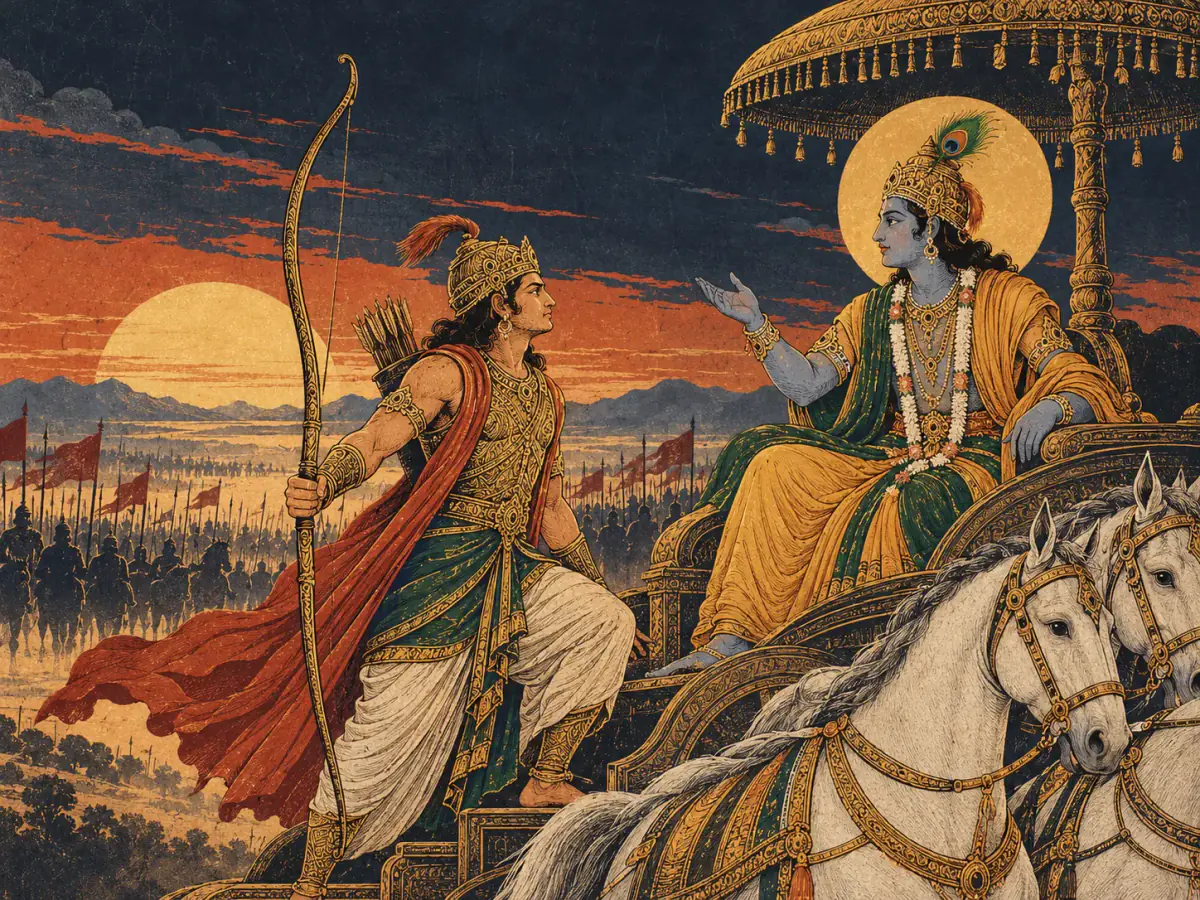
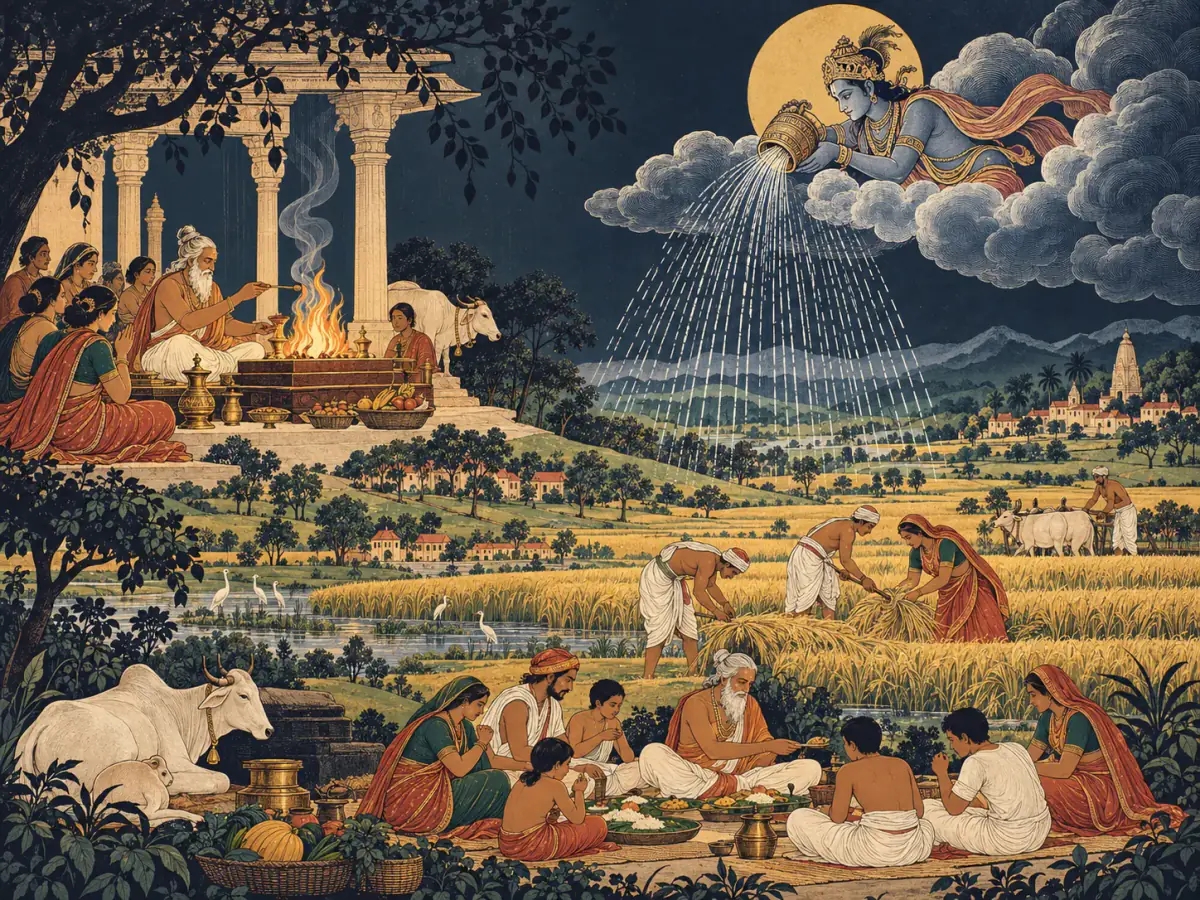
Read in sequence
Every part follows the passage in order so the movement of Kṛṣṇa’s teaching remains visible.
Opening Aniruddha Dāsa
Bhakti-Śāstrī Bhagavad-gītā Chapters 1 to 6
Read the first six chapters in twelve connected parts. Each guide combines chronological explanation, the complete assigned verse trail, purport study, diagrams, Indian artwork, learner activities, take-away lessons, preparation and an interactive understanding check.
Written by Aniruddha Dāsa Bhagavad-gītā Bhakti-Śāstrī study


How these guides serve you
Every part follows the passage in order so the movement of Kṛṣṇa’s teaching remains visible.
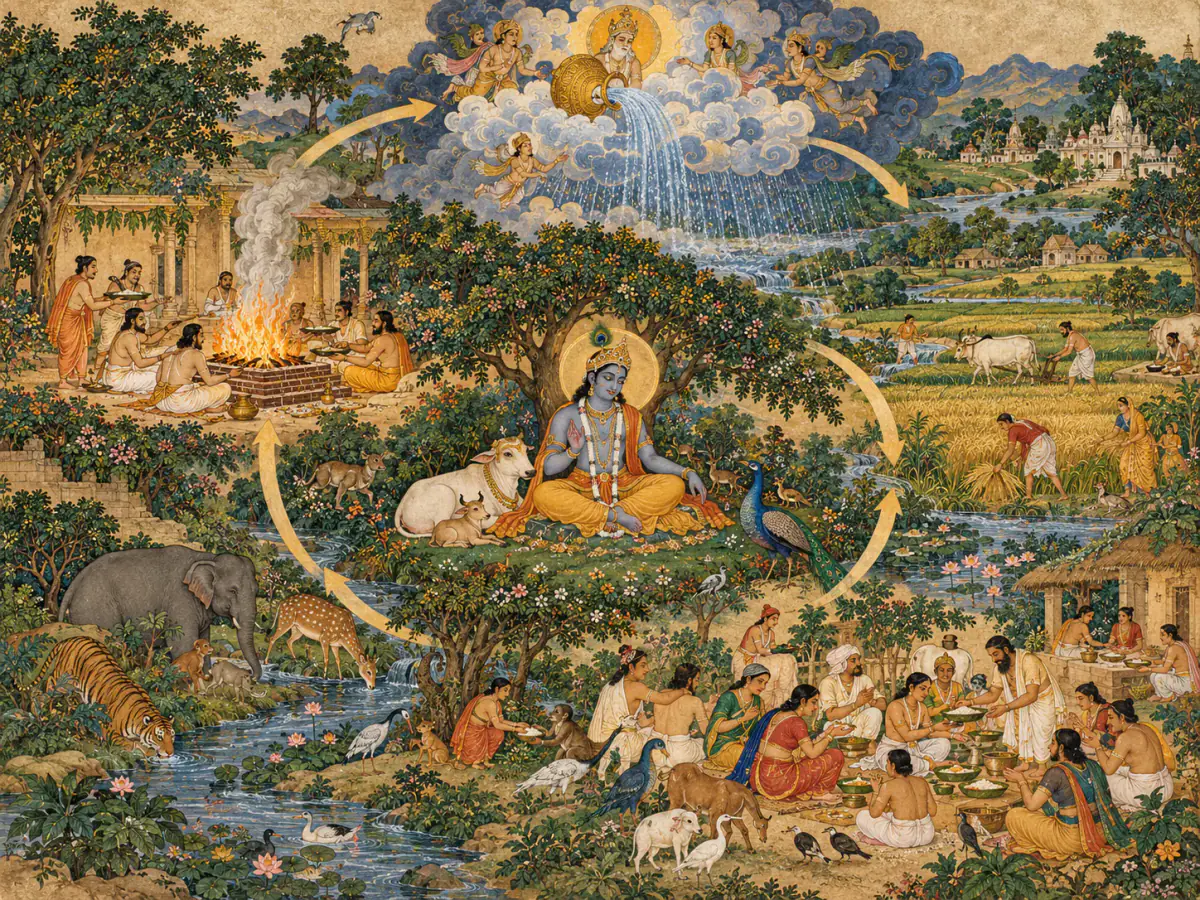
Roadmaps, comparisons, flow diagrams and Indian paintings reveal connections that can be difficult to hold in prose alone.
On-site and online activities ask you to retrieve, classify, explain, compare, apply and revise.
Choose a 10, 20 or 30-question review and receive immediate explanations with source links.
The course arc
Chapters 1 and 2 establish the battlefield, the learner’s crisis, the eternal self, duty, focused intelligence and steady wisdom. Chapters 3 and 4 develop offered work, sacrifice, leadership, paramparā, avatāra, knowledge and the approach to guru. Chapters 5 and 6 examine renunciation, equal vision, peace, meditation, the restless mind, practice, detachment and the culmination of yoga in faithful loving service to Kṛṣṇa.
Browse the complete series
12 of 12 study guides shown
Preface and Bhagavad-gītā 1.1 to 1.27
Study the purpose of Bhagavad-gītā, Kurukṣetra, Dhṛtarāṣṭra, Duryodhana, the named conches, Arjuna’s request and the movement toward spiritual inquiry.
Bhagavad-gītā 1.28 to 1.46 and 2.1 to 2.10
Follow Arjuna’s bodily distress, moral arguments, indecision, Kṛṣṇa’s challenge and the decisive change from argument to discipleship in Bhagavad-gītā 2.7.
Bhagavad-gītā 2.11 to 2.30
Understand the difference between body and self through Bhagavad-gītā 2.13, 2.20 and 2.22, with careful analogies, verse links and compassionate application.
Bhagavad-gītā 2.31 to 2.53
Explore prescribed duty, karma-kāṇḍa, buddhi-yoga, focused intelligence and the responsible meaning of Bhagavad-gītā 2.47.
Bhagavad-gītā 2.54 to 2.72
Study the sthita-prajña, sense control, higher taste, the sequence of fall-down and the ocean image of steady spiritual consciousness.
Bhagavad-gītā 3.1 to 3.16
Trace unavoidable action, work offered for Viṣṇu, reciprocal responsibility and the yajña cycle through a chronological Bhagavad-gītā study guide.
Bhagavad-gītā 3.17 to 3.43
Examine exemplary leadership, responsible guidance, action through the guṇas, lust and anger, and the hierarchy of self-mastery.
Bhagavad-gītā 4.1 to 4.15
Study disciplic succession, Arjuna as an authorised hearer, Kṛṣṇa’s divine appearance, avatāra, reciprocal revelation and divine action.
Bhagavad-gītā 4.16 to 4.42
Distinguish karma, akarma and vikarma, compare forms of sacrifice, approach spiritual knowledge through guru and examine how knowledge cuts doubt.
Bhagavad-gītā Chapter 5
Compare action and renunciation through the lotus leaf, the city of nine gates, equal vision, inner happiness and Kṛṣṇa’s peace formula in Bhagavad-gītā 5.29.
Bhagavad-gītā 6.1 to 6.32
Study true renunciation, the mind as friend or enemy, regulated meditation, repeated return, samādhi and equal vision in the practice of yoga.
Bhagavad-gītā 6.33 to 6.47
Complete Chapters 1 to 6 through Arjuna’s concern about the restless mind, practice and detachment, the unsuccessful yogī and loving devotion as the culmination of yoga.
Study topics and related reading
This collection is designed for readers searching for a detailed Bhagavad Gita Chapter 1 summary, Arjuna’s reasons for not fighting, Bhagavad Gita 2.7 surrender, Bhagavad Gita 2.13 reincarnation, Bhagavad Gita 2.20 and the eternal self, karma-yoga, Bhagavad Gita 2.47, the yajna cycle, desire and anger, parampara, Bhagavad Gita 4.7 and 4.8, approaching guru in Bhagavad Gita 4.34, the peace formula of Bhagavad Gita 5.29, Bhagavad Gita Chapter 6 meditation, control of the mind, the unsuccessful yogi and Bhagavad Gita 6.47 on the topmost yogi.
The twelve guides support personal reading, study groups, online classes and projected teaching. They combine source-grounded explanations with visual maps, interactive Bhagavad Gita activities, questions and answers, complete verse links, purport study, take-away lessons and preparation for continued learning. The pages distinguish the scriptural passage, commentary, summary and present-day application so that careful reasoning and devotional study can remain together.