Known through relationship
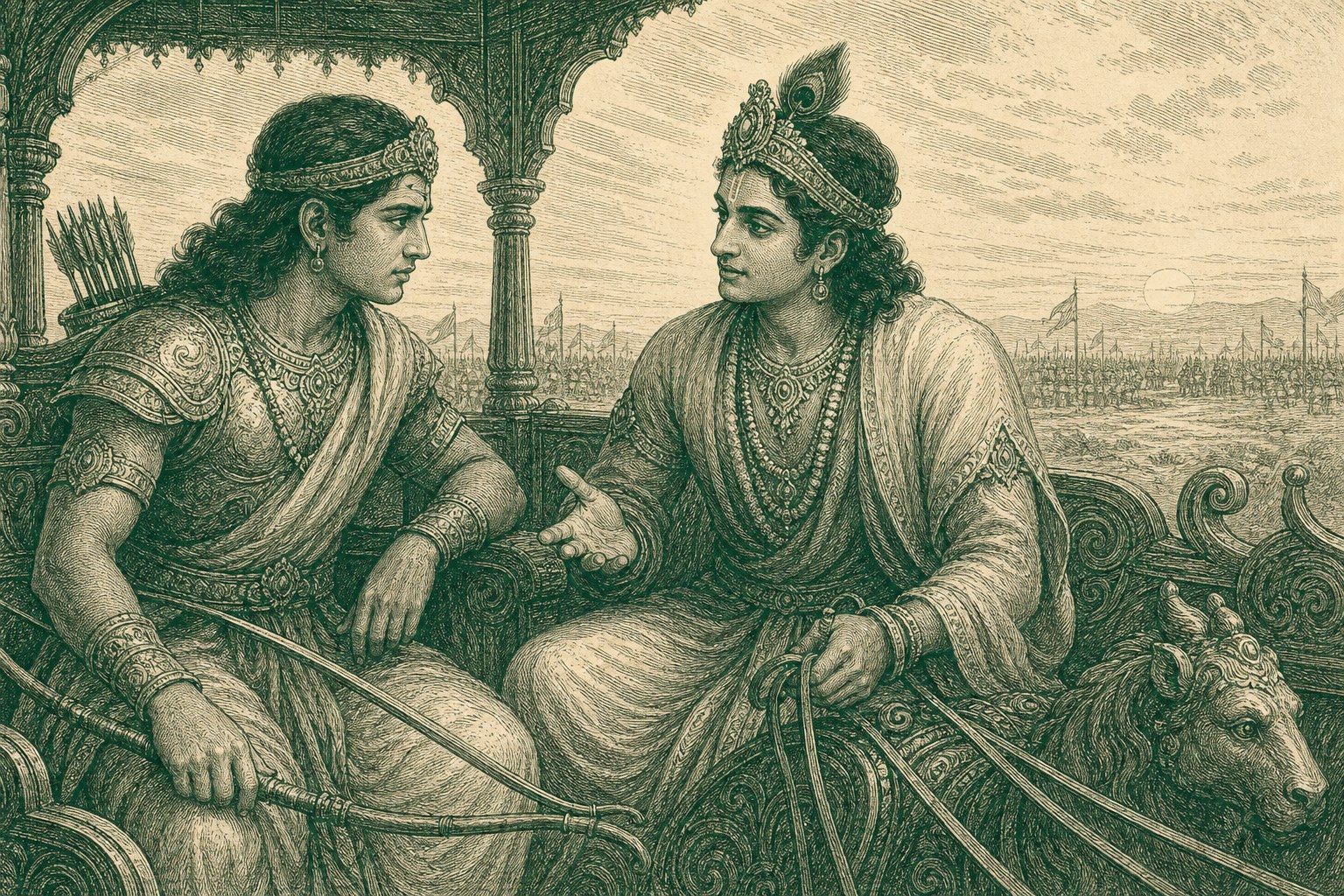
Bhagavad-gītā presents Kṛṣṇa as Arjuna’s friend and charioteer, yet also as the source from whom everything emanates. These are not competing portraits. His divinity does not make relationship impossible. It makes relationship the deepest truth of spiritual life.
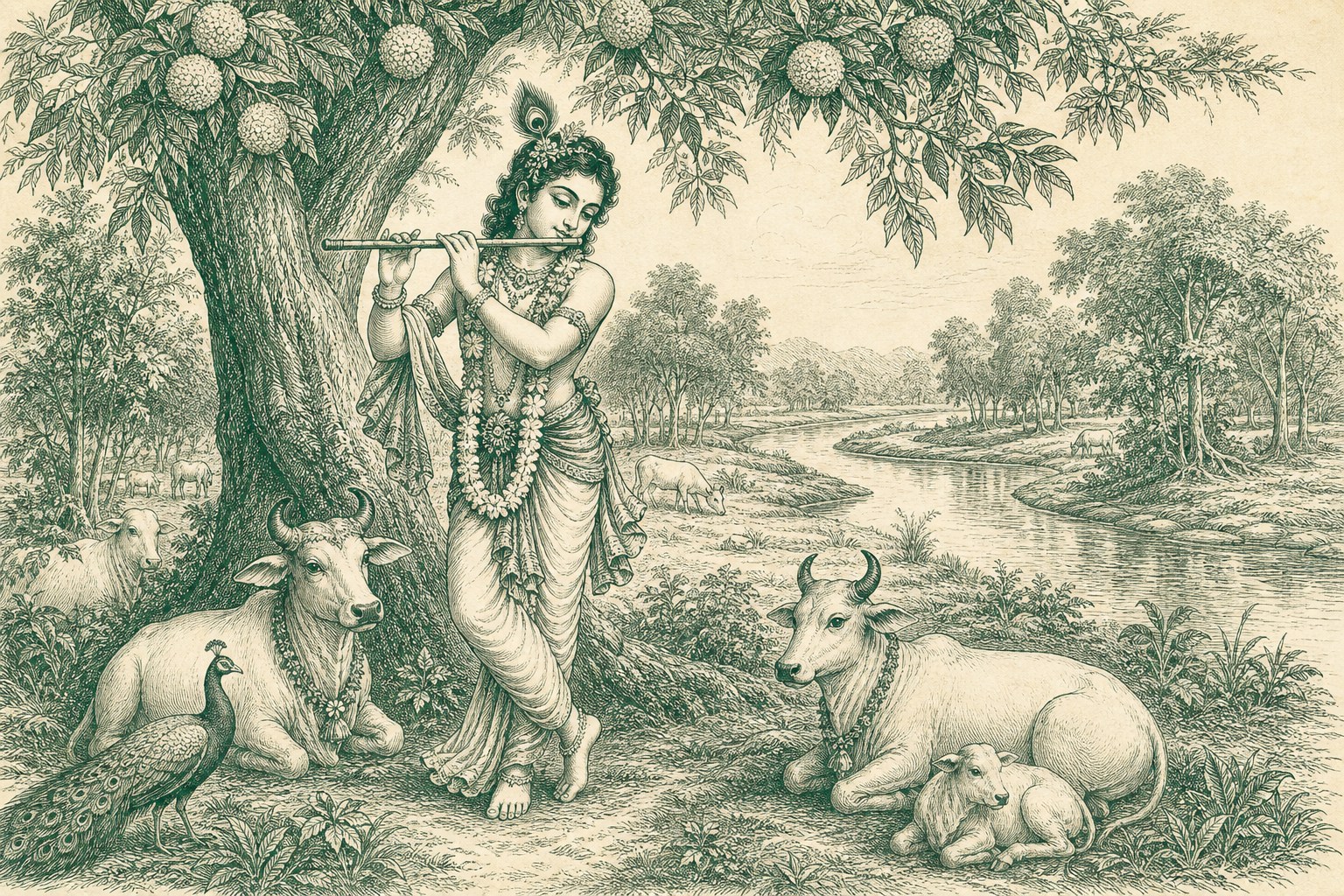
The narratives of Vṛndāvana reveal Kṛṣṇa among parents, friends, cows, rivers, forests, and those who love him without calculation. Gaudiya Vaiṣṇavas therefore speak of the Absolute not only through power and infinity, but through beauty, play, affection, and reciprocation.
The different relationships are not metaphors added to a distant God. They reveal that personhood, affection, and exchange belong to the deepest reality. Kṛṣṇa can be approached with reverence, but he also allows love to forget his majesty.
Friend
Confidence, play, and companionship.
Child
Care, tenderness, and protective love.
Beloved
Longing, beauty, and complete self-giving.
Guide
Wisdom offered within friendship.
Shelter
The place where every relationship rests.
Vṛndāvana and the intimacy of God
Vṛndāvana is remembered as a world arranged around affection. Forest paths, the Yamunā, cows, flute song, meals, jokes, danger, reunion, and separation all become settings for exchange with Kṛṣṇa.
What is striking is the absence of calculation. The residents do not love Kṛṣṇa because they have completed a philosophical proof. They love because he is theirs, and they are his.
This intimacy does not deny Kṛṣṇa’s greatness. It reveals a greatness able to become close, playful, dependent, and conquered by love.

The conversation at Kurukṣetra
Bhagavad-gītā begins with Arjuna unable to act and unwilling to disguise his confusion. Kṛṣṇa does not dismiss the crisis or offer a slogan. He stays within the relationship and patiently unfolds the nature of the self, action, knowledge, meditation, duty, and devotion.
The setting matters. This is not a quiet lecture hall. The teaching arrives within pressure, grief, competing duties, and the consequences of action. Kṛṣṇa’s guidance does not remove Arjuna from responsibility. It helps him see how responsibility can be held in relation to the eternal self and the Supreme Person.
Arjuna listens, questions, remembers, and finally chooses. Bhakti does not erase intelligence or agency. It gives both a center.
From hearing to remembrance
Remembering Kṛṣṇa is not limited to a single mood or setting. It can begin with sound, become thought, enter an offering, guide a choice, and return as gratitude.
The practices support one another. Hearing gives content to chanting. Chanting gives warmth to remembrance. Offering turns possession into relationship. Service carries remembrance into the needs of another person.
Hear
Names, words, qualities, and pastimes.
Chant
Let the holy name become audible and embodied.
Offer
Return food, work, time, and attention with love.
Serve
Meet Kṛṣṇa through the needs of his devotees.
Remember
Carry the relationship back into ordinary life.
Practices that keep the relationship near
- Hearing Kṛṣṇa’s names, words, qualities, and pastimes
- Chanting the Hare Kṛṣṇa mahā-mantra
- Serving the deity, devotees, sacred places, and the wider world
- Offering food with devotion and receiving it as prasāda
- Learning to remember Kṛṣṇa within ordinary duties and relationships
- Reading with enough patience for the conversation to become personal
The center of bhakti is not an idea about Krishna. It is Krishna himself, remembered, addressed, served, and loved.
Why the center holds
Spiritual life can become crowded with techniques, identities, projects, and arguments. Kṛṣṇa gives all of them a center. The question becomes simple enough to carry, even when the answer takes a lifetime: does this help me remember and serve him?
That center does not make life narrow. It allows relationships, work, beauty, grief, study, food, music, and responsibility to be gathered into a coherent offering.
To say that Kṛṣṇa is the center is therefore not to place a religious label on everything. It is to keep returning to the person for whom the practices, teachings, and communities exist.