A practice larger than my concentration
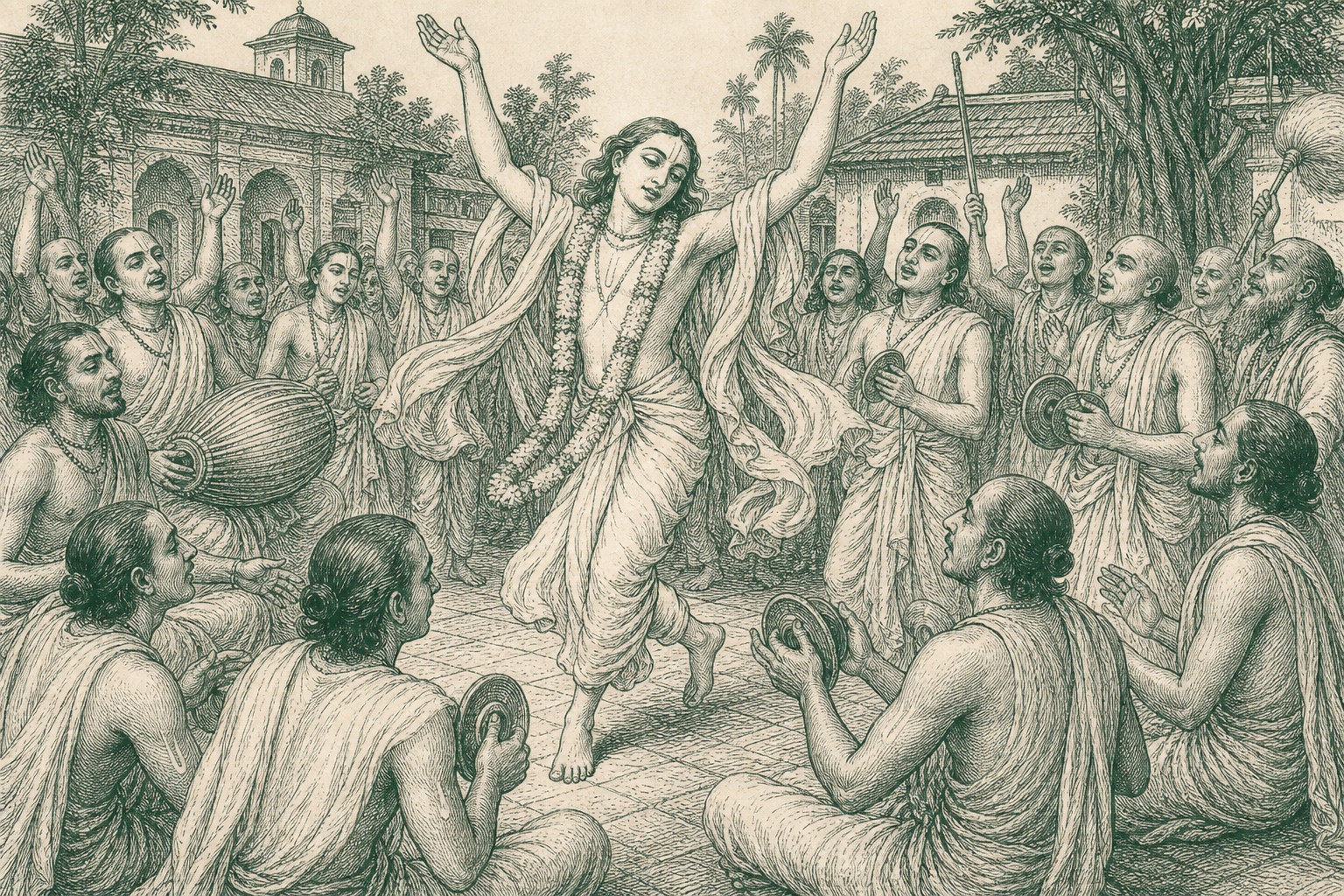
Private japa exposes the condition of attention with great honesty. Saṅkīrtana adds another mercy: when my concentration weakens, the response of another singer, the pulse of the mṛdaṅga, or the steady kartālas can invite it back.
This is not an excuse for passivity. Shared practice works because people offer attention to one another. The lead listens to the response. Musicians serve the name rather than compete with it. The gathering learns when intensity should rise and when it should become quiet.
The theology is carried in the form
Call and response is not merely an efficient musical structure. It makes room for dependence. No one person supplies the whole sound. A name is offered, received, and returned. The form gently contradicts the fantasy of self-sufficiency.
Śrī Chaitanya’s movement carried this practice into courtyards, roads, and homes. Sacred sound did not remain restricted to private scholarship. It became public, embodied, and available to people who might never enter a philosophical debate.
What remains after the instruments stop
A moving kīrtana can be remembered as an experience, but its deeper gift may appear later. Does the chanting make it easier to remember Kṛṣṇa while serving? Does it soften the demand to be noticed? Does another person’s voice become less irritating and more precious?
Shared remembrance is fulfilled when it changes how we share the world. The sound returns us to relationship, and relationship gives the sound somewhere to live.